Understanding Zero-Knowledge Proofs The Privacy Infrastructure Powering Trust

A few weeks ago I stumbled on a thesis. 128 pages. Published on SSRN by an independent researcher named Nicolin Decker. Title: "Zero-Knowledge Proofs: A Privacy-Preserving Cryptographic Model for Financial Compliance and Global Banking Security." Decker builds, from first principles, a formal mathematical case for what a privacy-preserving
Compliance-ready blockchain infrastructure, identity, and real-world adoption For years, the dominant narrative revolved around tokens, cycles, yields, and speculation. Meanwhile, the harder questions such as identity, compliance, institutional integration, and how distributed systems interact with real-world legal and economic structures were postponed. That phase produced valuable innovation, but it did
On the surface, this was a technical discussion about Zero-Knowledge technology, identity, compliance, and privacy. But that reading misses the real signal. What we just witnessed went beyond a feature conversation, it was an infrastructure conversation. Regulation, identity frameworks, AI agents, medical data portability, critical infrastructure, and even national security

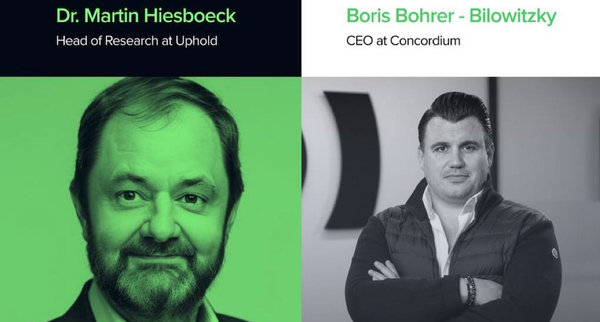
In this episode of the Crypto 101 Podcast, Concordium CEO Boris Bohrer-Bilowitzki joins the conversation for a wide-ranging discussion on where blockchain adoption has stalled, why identity and verification are now unavoidable, and how Concordium is deliberately positioning itself for real-world use. The conversation cuts through market noise and price