Boris Bohrer-Bilowitzki on Stablecoin Infrastructure, Identity, and Concordium's 2026 Outlook
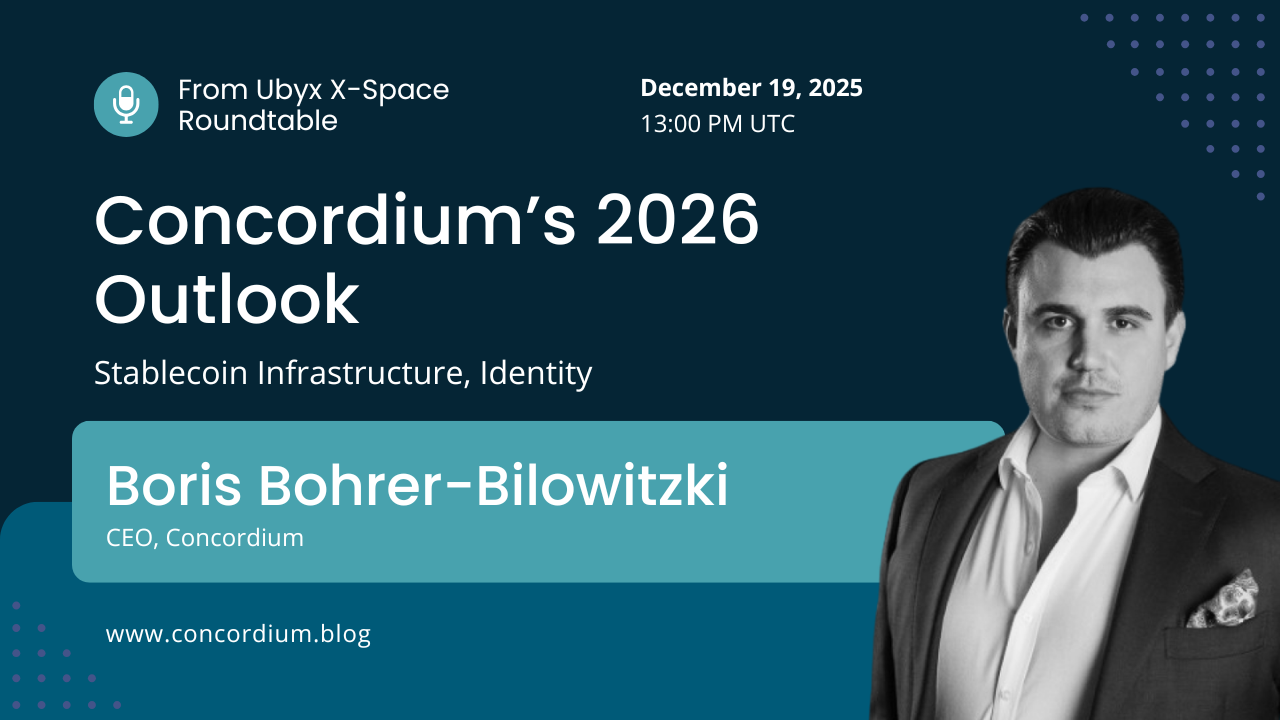
On December 19, 2025, Concordium CEO Boris Bohrer-Bilowitzki joined an X Space roundtable hosted by Ubyx alongside Ivar Wiersma from LayerZero Labs. The session explored stablecoin infrastructure, cross-chain interoperability, and the regulatory landscape shaping institutional adoption.
Boris stepped in at short notice for Concordium's Chief Commercial Officer Mike Milner and delivered a focused set of remarks on Concordium's positioning, identity-first design philosophy, and the ecosystem's trajectory heading into 2026.
This summary covers Boris's contributions to the discussion. His comments touched on three areas: Concordium's strategic differentiation from crypto-native stacks, the role of identity and age verification in enabling compliant adoption, and the execution milestones and outlook for the year ahead.
1 Concordium's core positioning: compliance vs crypto-native stacks
Interoperability matters
- But it's use-case specific
Concordium does not compete with Ethereum / Solana
- Crypto-native stacks already serve crypto-native users
- No value in fighting ecosystem scale battles
- Differentiation required
Industry is institutionalizing
- Especially around tokenisation
- Design constraints have changed
Compliance is unavoidable
- Required for mainstream adoption
- Cannot be layered on later
Identity as a core primitive
- Built in from inception (2015–16)
- Designed by cryptographers
- Zero-knowledge proofs by design
Privacy ≠ anonymity
- Privacy preserved
- Regulatory requirements respected
Identity enables participation
- Onboard once
- Interact privately thereafter
Age verification as key use case
- High real-world demand
- Attribute proof (e.g. "over 18")
- No unnecessary PII exposure
Protocol-level tokens (PLTs)
- Native issuance on L1
- For stablecoins and MMFs
Smart contracts have limits
- Custodial risk
- Honeypot risk
- Repeated exploits (e.g. large DeFi losses)
Institutional risk tolerance differs
- Non-crypto-native users
- Security perception matters
Programmable money must be safer
- Protocol-level issuance preferred
Adoption requires abstraction
- "Blockchain should be used, not understood"
- Wallets / seed phrases are friction
UX comparison
- Payments (Starbucks)
- Trading (Robinhood)
- Infrastructure hidden from users
DApp usage stagnation
- Complexity not abstracted
Stablecoins are the wedge
- Payments focus
- Treasury management
- Real-world money movement
Skepticism toward pure P2P cash narrative
- Use cases matter more than ideology
Concordium focus
- Enable compliant stablecoin issuance
- Real-world applicability
- Mainstream adoption
2 Identity, age verification, and regulatory realism
Digital interaction is now the default
- Onboarding required for most services
Identity without PII exposure
- Attribute-based verification
- Example: proving "over 18" only
- No need to reveal name, address, or birthdate
Regulatory validation
- Presented to Ofcom
- Regarded as a strong solution
Lowering adoption barriers
- Complexity excludes most users
- DeFi learning curve too steep for mainstream users
Stablecoins are understandable to non-crypto users
- Mirror existing bank balances
- Familiar payment flows (e.g. Apple Pay)
Regulatory scrutiny is unavoidable
- First-hand experience from custody background
- Scrutiny increases, not decreases, with scale
Compliance cannot be bypassed
- KYC/AML will not disappear
- No regulator will abandon requirements
Cypherpunk ideals vs reality
- Ideological purity not viable at scale
- Pure crypto-native market is capped
Industry implication
- Growth requires serving the non-crypto-native majority
- Compliance-aware identity is essential for adoption
3 2025 execution, ecosystem progress, and 2026 outlook
2025 restructuring
Internal reset
- Momentum rebuilt
- Q4 = "tip of the iceberg"
Ecosystem traction
- ~10 stablecoin issuers building on Concordium
Wallet partnerships
- Ledger
- Bitcoin.com
- Safle
- Coin98
- Focus: age-verifying payments
Age verification verticals
- Access control
- Payment gating
- Gambling
- Adult industry
PayFi positioning
- Recognised as a PayFi chain
- Smaller scale, differentiated focus
Merchant expansion
- PSP partnerships
- Thousands of merchants reachable
- Non-crypto-native use cases
Regulatory tailwinds driving PMF
- Australia Online Safety Act
- European regulation on platform access
Beyond non-yielding stablecoins
- Tokenized money market funds
- Time value of money
- Payments + yield spectrum
Market signal
- Uptake increasing
- Attention shifting beyond crypto-native users
Cross-chain considerations
- Bridging discussed
- Demand-driven interest
2026 outlook
- Adoption accelerating
- Stablecoin movement "hitting home"
- Regulatory clarity improving
Key regulations cited
- GENIUS Act
- Clarity Act
- MiCA fully in force
Overall stance
- Ecosystem growing
- Groundwork complete
- Positioned to compete more meaningfully